

Innovision EQ offers a full suite of digital strategy services and technical and soft skills training programs:
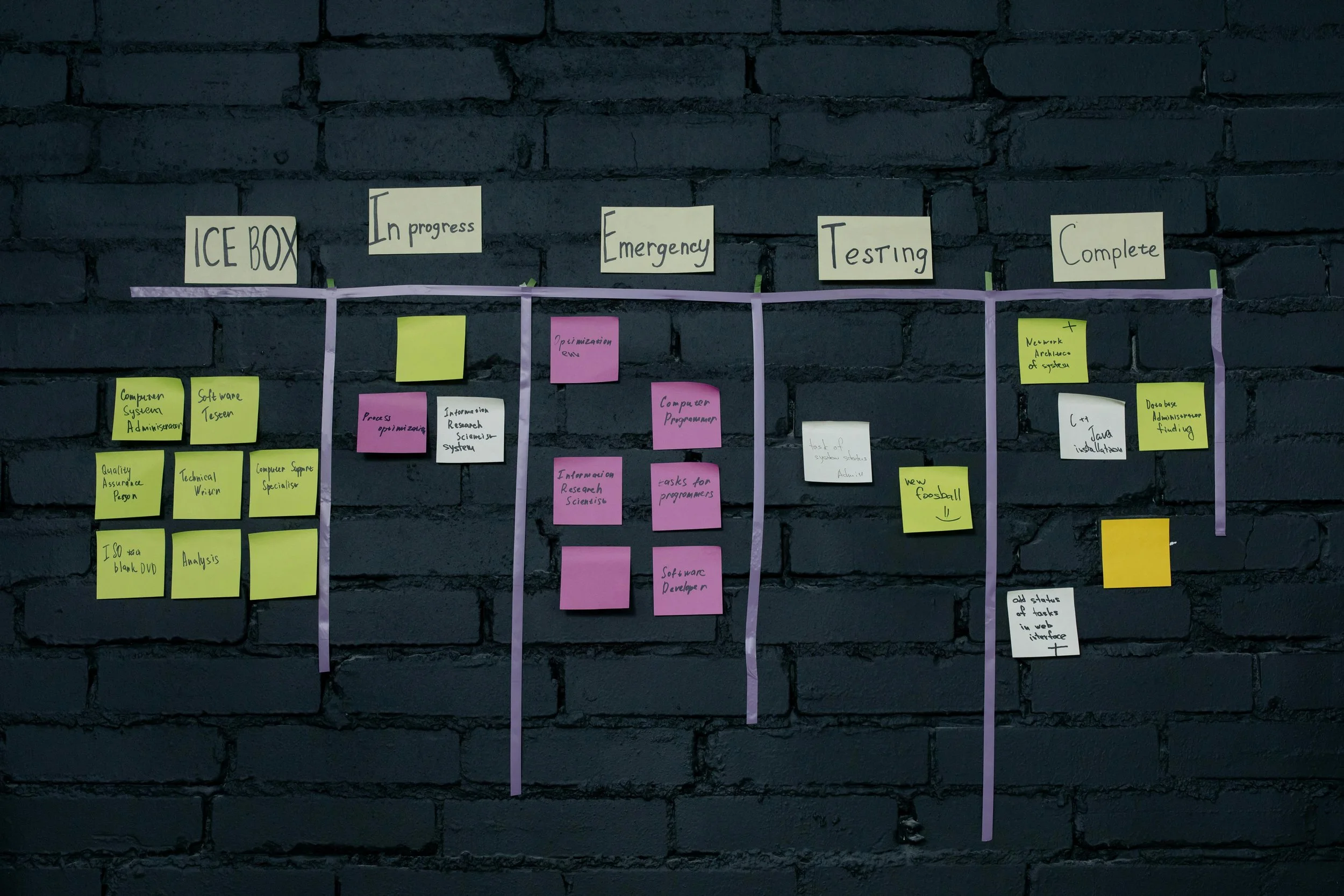
Agile Transformation
Speed up innovation: Agile’s iterative approach delivers value quickly, allowing digital companies to launch new features faster based on customer feedback. This continuous adaptation ensures that your product remains relevant and stays ahead of competitors.
Increase adaptability: Agile allows companies to quickly respond to changes in market conditions, customer needs, and technology. This flexibility reduces risk and enables your company to pivot strategy with ease.
Enhance customer focus: By involving customers throughout development, your digital company can ensure products directly meet user needs. This continuous feedback loop boosts customer satisfaction and loyalty.
Improve collaboration and efficiency: Agile promotes cross-functional teams, breaking down silos and empowering employees. This leads to better communication, higher morale, and a more productive, innovative workforce.

Beyond the Chatbot: Engineering Agentic AI Solutions
Master Agentic Autonomy: Move beyond basic automation to build AI-Native systems that autonomously reason, adapt, and act toward complex organizational goals.
Architect System AI: Utilize IDEO-aligned Innovation Strategy to deconstruct legacy friction and replace it with a cohesive decision architecture rooted in human-centered design.
Solve High-Value Problems: Identify "problems worth solving" in Healthcare, Finance, and Public Services, moving from theoretical "What if?" to pitch-ready, high-impact solutions.
Audit for Intelligence: Gain professional artifacts, including an Opportunity Framing Board and an Intelligence Audit, to distinguish high-value reasoning agents from low-impact retrieval bots.
The Human Advantage: Emotional Intelligence in the AI Era
Master the Emotional Load: As AI automates logic and reasoning, leaders must master the "Emotional Load"—the essential human skills of empathy, connection, and influence required in the Age of Autonomy.
Leverage Neurobiological Influence: Move beyond simple social skills to understand the neurobiology of influence, translating decades of high-level academic research into a practical toolkit for high-stakes leadership.
Apply Clinical-Grade Frameworks: Utilize foundational research from Goleman and the Ivy League to implement rigorous, clinical-grade frameworks for emotional regulation and social precision in professional environments.
Secure Competitive Advantage: Transition from "getting along" to treating Social & Emotional Intelligence (EQ) as a hard-edged strategic asset and the ultimate differentiator for modern innovation leaders.


Design Thinking & Ideation Workshops
Foster user-centric innovation: Design thinking forces your company to deeply empathize with customer needs, resulting in products and services that genuinely solve problems and create value. Ideation is where this knowledge is translated into a multitude of creative solutions, ensuring the best possible outcome, extinguishing pain points and meeting needs.
Reduce risk and waste: By using rapid prototyping and testing, design thinking allows your teams to validate assumptions and catch potential issues early. This significantly reduces the time and resources spent building the wrong solution.
Encourage collaboration and diverse thinking: Ideation sessions bring together cross-functional teams, breaking down departmental silos. This collaborative environment leverages diverse perspectives, which often leads to more robust, creative, and comprehensive solutions.
Accelerate time to market: By structuring the creative process, design thinking, and ideation allow your organization to move quickly from a validated problem to a tangible solution. This iterative approach enables faster launches and continuous product improvement.
UX Product Strategy
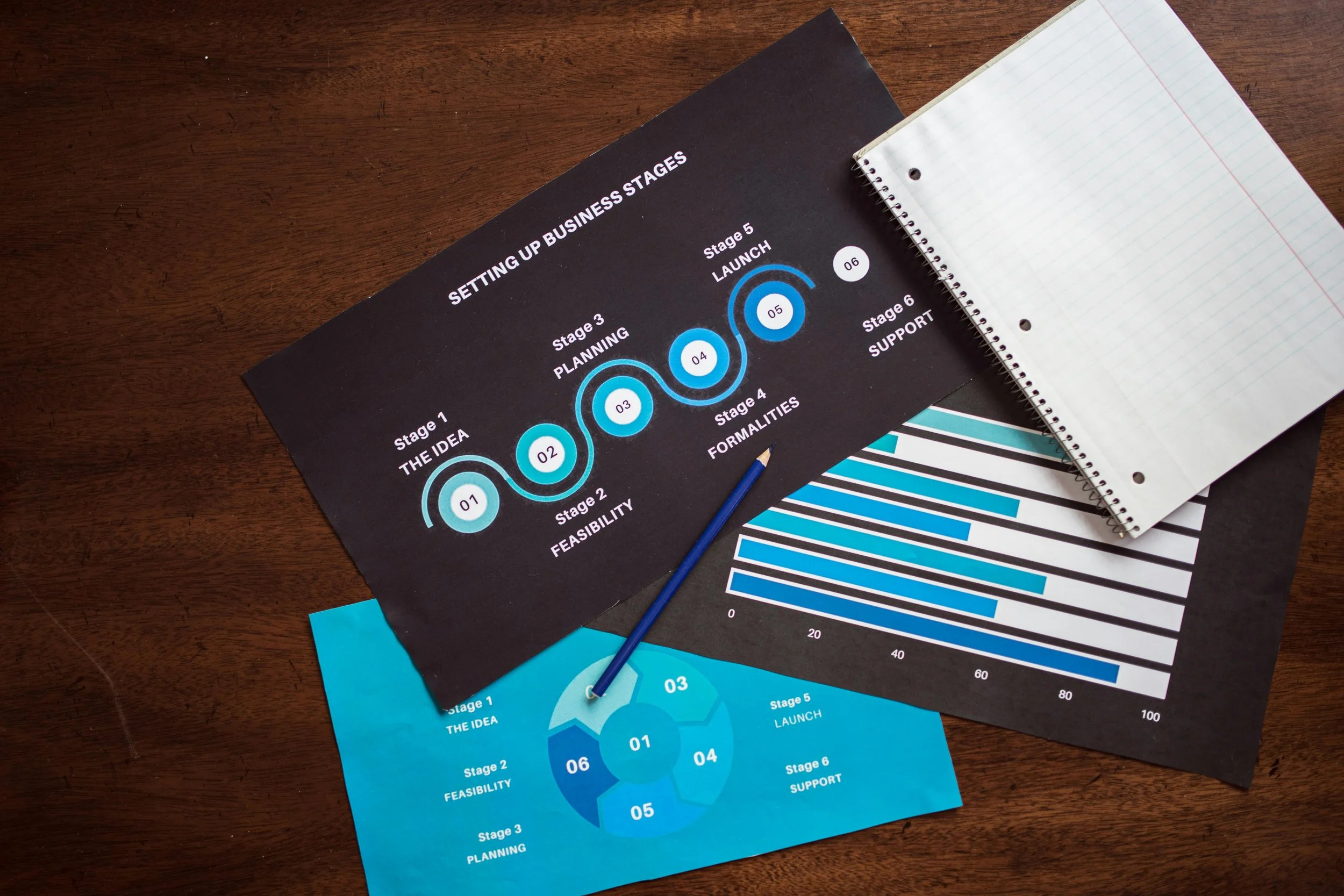
Provide a guiding vision: A clear product strategy ensures your product teams’ efforts align with the company's overarching vision and business goals. It acts as a compass, preventing teams from getting pulled in different directions and wasting resources.
Prioritize effectively: It helps product managers make better decisions about which features to build and where to allocate limited resources, ensuring focus on initiatives that create the most customer and business value.
Create competitive advantage: A strong strategy defines the products’ unique value propositions and how they stands out. This differentiation helps the products resonate with the target audience and achieve long-term market success.
Drive adaptability and growth: By outlining a data-driven approach, the strategy allows you to anticipate and respond to market changes and customer needs. This agility and focus fuels sustainable growth and innovation.

Content Strategy & Design
Align with Business Goals: Ensure all content efforts support key business objectives like conversions, lead generation, and brand growth.
Improve User Experience (UX): Create a clear, consistent, and useful content experience that meets audience needs and builds trust.
Enhance Brand Authority: Position your company as a credible and knowledgeable expert in its industry by providing high-quality, valuable content.
Drive Online Visibility: Optimize content for search engines (SEO) and social media, boosting online presence and driving traffic.
Increase Efficiency: Provide a roadmap for content creation, delivery, and governance, which reduces costs and maximizes the impact of efforts.

Digital Marketing
Target Reach: Precisely connect with ideal customers through specific channels, maximizing marketing effectiveness.
Cost-Effectiveness: Marketing digitally is more affordable and delivers a higher ROI than traditional marketing methods.
Measurable Results: Provide real-time analytics to track campaign performance and inform data-driven adjustments.
Enhance Customer Engagement: Build direct, personalized relationships and loyalty through continuous interaction.

Data-Driven Decisioning
Inform decision-making: Using data analytics and business intelligence provides concrete, evidence-based insights rather than relying on guesswork. This enables you and your teams to make better strategic and tactical decisions.
Optimize performance: Data analytics helps your organization identify patterns and trends to increase efficiency, reduce costs, and optimize operations. A/B and multivariate testing allow for continuous, data-driven optimization of products and campaigns.
Enhance customer experience: Analyzing customer data helps you better understand your users' behaviors and preferences. This enables personalized experiences and improved products that boost satisfaction and loyalty.
Drive competitive advantage: By effectively analyzing market trends and customer behaviors, you can identify and seize new opportunities faster than your competitors. A/B testing provides a rapid, low-risk way to gain an edge.

AI & Machine Learning
Drive efficiency and innovation: AI and machine learning automate repetitive tasks, allowing your employees to focus on more complex, strategic work. This boosts overall productivity and accelerates the development of new products and services.
Personalize customer experiences: AI analyzes customer data to deliver hyper-personalized content, recommendations, and customer service. This leads to deeper engagement and increased customer satisfaction and loyalty.
Enable proactive decision-making: Using machine learning to process massive datasets, companies can gain valuable insights and predict future trends. This predictive power allows for smarter, data-driven decisions and helps you stay ahead of the competition.
Enhance cybersecurity and fraud detection: AI can analyze network traffic and transaction patterns in real-time to detect anomalies and flag potential threats. This helps protect sensitive data and prevent costly security breaches.

Internal Process Redesign
Increase efficiency and reduce costs: Process redesign eliminates bottlenecks, automates manual tasks, and reduces waste, allowing digital companies to deliver products faster and at a lower cost.
Enable scalability: Optimized processes are necessary for growth. Redesigning ensures that digital businesses can scale operations efficiently without sacrificing quality as you expand.
Improve customer experiences: Streamlining internal processes, from order fulfillment to customer support, creates a more seamless and responsive experience for the customer, boosting loyalty and satisfaction.
Drive digital transformation: Redesigning outdated processes is often a prerequisite for successfully adopting new technologies like AI and automation. It ensures the technology is integrated into an efficient system rather than a broken one.

Cross-Functional Collaboration
Break down silos: Collaboration across departments like engineering, marketing, operations and sales ensures a unified approach to problem-solving. This prevents teams from working in isolation and wasting resources on misaligned goals.
Boost innovation: Diverse perspectives and skills from different areas spark new ideas and creative solutions that one department could not achieve alone. This enables faster adaptation to changing market demands.
Improve efficiency and speed: With a shared understanding and direct communication channels, cross-functional teams reduce bottlenecks and project handovers. This leads to quicker decision-making and faster product delivery.
Enhance customer satisfaction: When all teams focus on the same customer-centric goal, they can create more cohesive products and better service. This builds stronger relationships and drives loyalty.